Is Creativity Theft?

Here is a provocative quote on the nature of creativity by the American filmmaker Jim Jarmusch:

“Nothing is original. Steal from anywhere that resonates with inspiration or fuels your imagination. Devour old films, new films, music, books, paintings, photographs, poems, dreams, random conversations, architecture, bridges, street signs, trees, clouds, bodies of water, light and shadows.
Select only things to steal from that speak directly to your soul. If you do this, your work (and theft) will be authentic. Authenticity is invaluable; originality is non-existent. And don’t bother concealing your thievery - celebrate it if you feel like it. In any case, always remember what Jean-Luc Godard said: ‘It’s not where you take things from - it’s where you take them to.’"


What might make you bristle when you read this is his use of the word "steal" - which of course is something we have all been trained to recoil from and think of as wrong and sinful.

But Jarmusch is not telling people it's OK to rip off one particular idea or image from a fellow creator. He is talking about the true essence of creativity - in which we amalgamate all our influences and what I call our "visual vocabulary" (the sum total of all the images we have processed in our memory) into our new creations ( or, as I often tell my students "Use everything at your disposal"). Art is not created in a vacuum of ideas..

Of course, the last quote from Godard is a key qualifier "It's not where you take things from, it's where you take them to.

left -” Pietà” by Sofonisba Anguissola , right - “Pieta in Gangland” by Thomas Dodd

left -” Pietà” by Sofonisba Anguissola , right - “Pieta in Gangland” by Thomas Dodd
Why Artists Should Listen to Criticism

There is a meme currently making the rounds in the online art world and especially in the growing “art coaching” scene..
It goes like this:

”A young artist exhibits his work for the first time and a well known art critic is in attendance.
The critic says to the young artist, "would you like my opinion on your work?"
”Yes, " says the artist.
”It's worthless," says the critic
The artist replies, "I know, but tell me anyway."

In my opinion this meme is actually giving very bad advice to young artists, inferring that they should just ignore ALL criticism, especially the criticism that comes from a respected art critic (not just a random stranger on the internet) while also postulating that a professional art critic would walk up to a young artist and just try to crush them with a two word assessment of their work. Perhaps that may happen in some extreme scenario, but I guarantee you that the majority of critics would be much more likely to simply ignore your work (if they found it “worthless” ) or maybe tell you what they thought you needed to work on to make it better (if they thought your work had promise).

We must be aware of the Dunning-Kruger effect from either extreme (ie - unjustifiably thinking your work is great or self-defeatingly thinking it is worthless).

Agreed, artists should follow their own paths/visions and not be slaves to trends and/or the comments of random strangers, but we should also listen to intelligent criticisms of our work and actually seek out critiques from industry insiders whose opinions we respect.
You may discard the advice which you think would take you down a different path from that which you are currently on (the one which your passions and intentions steer), but I guarantee you that there is something to be learned from every intelligent and thoughtful critique you will receive in the course of your artistic life.

I realize ultimately this is just a meme trying to bolster confidence in a world where people are often unsure of themselves and their work, but again - any art critic worth their salt would never say that kind of thing to a young artist..
An intelligent critique/criticism lists your strengths and weaknesses and gives you a blueprint for advancement - especially if you can detach your ego from it and actually use it to your advantage and growth process..

The path of the artist is often like a tight rope walk: there are a lot of outside influences and distractions trying to pull you off of that rope, and while there are indeed many success stories about people who proved the nay-sayers wrong, there are many, many more of people who learned from the criticisms and critiques they received along the way in their lengthy careers and grew as artists as a result..

My ultimate advice to artists is “Use everything” - even if it is just using criticisms for the fuel in your artistic fire..

photo by SNAP! Orlando

photo by SNAP! Orlando

The Spirituality of Imperfection - Punk Rock and Julia Margaret Cameron

I will never forget the cathartic “Eureka!” moment that directly led to me becoming a musician (and indirectly - a visual artist decades later).
This was the moment that propelled me down a path that I still am on today - where expressing the depths of the human condition has been a mission and calling, as well as a career and a means to (hopefully) inspire others.

It was back during my teen-aged years (1977) in Orlando while listening to FM radio (WDIZ) that I first heard the music of the Sex Pistols (the song "Sub-Mission") played by a DJ/program director named Craig Michaels (who I heard was later fired for that very bold and forward-thinking decision) and was immediately inspired to start playing guitar as a result of hearing that aural onslaught of anger and bravado. 


It wasn't only that the Sex Pistols’ (and other bands like the Ramones, Clash, Stranglers and the Damned) music encapsulated my teen-aged rage and angst, it was even more so an overwhelming and intoxicating feeling of "I can do that too! " that their sound stirred in me. ..

I had listened to bands like Pink Floyd and Led Zeppelin before then, but never imagined myself playing that music. It all seemed so perfect and polished - as if it was being manifested by unearthly gods who had deigned to bestow it upon us mere mortals as a soundtrack to our insignificant existences..

But Punk Rock seemed so raw and vital to me - as if I was participating in it with the "performers" ( and Punk definitely sought to break down the barriers between audience and stage ). It was commanding me to shun the norms and conventions of a routine & mundane existence that the aforementioned Rock Gods had been merely an escape from and a soundtrack to. 

I  almost immediately went out and got a guitar and began writing songs, starting bands and embarked upon a  music career that lasted for well over three decades (eventually ending with me playing Celtic harp in a band called Trio Nocturna , that put out 3 albums and developed a fan base in the Gothic and Celtic scenes), so years later when I switched to photography I already had that experience of being a freelance artist and I never forgot the lessons that Punk Rock taught me : Do It Yourself - don’t wait for anyone to “discover” you or tell you what to do. Just get out there and do it, and it doesn't matter if you aren't technically polished, or even proficient.. What matters is that you have something to say and that you are never ever boring and/or following mainstream thought programming.

In my 30s I began reading the writings of Joseph Campbell - he postulated that the main two forces in Art are best represented by the the Greek gods Apollo and Dionysus. Apollo represents skill, order, mastery and left- brained logic. Dionysus represent passion, revelry and the right-brained principles of improvisation and intoxication through immersion in pure passion.

The balanced artist harnesses both - although there are extremes on both sides. There is the virtuoso player with no passion or “feel” (as comically represented by Yngwie Malmsteen and other "shredder” guitarists popular in the 1980s) as opposed to a primitive punk band or bluesman with a modicum of technique and lots of “feel” (I would rather listen to John Lee Hooker banging away on one chord  about a woman who done him wrong over the the showy “look at me" riffing of a Stevie Ray Vaughn or Eddie Van Halen any day)

To this day I still listen to raw and unpolished bands with very little technical prowess but I still can not listen to purely virtuoso type music, unless maybe you categorize the Baroque music of Bach and Telemann in the latter..

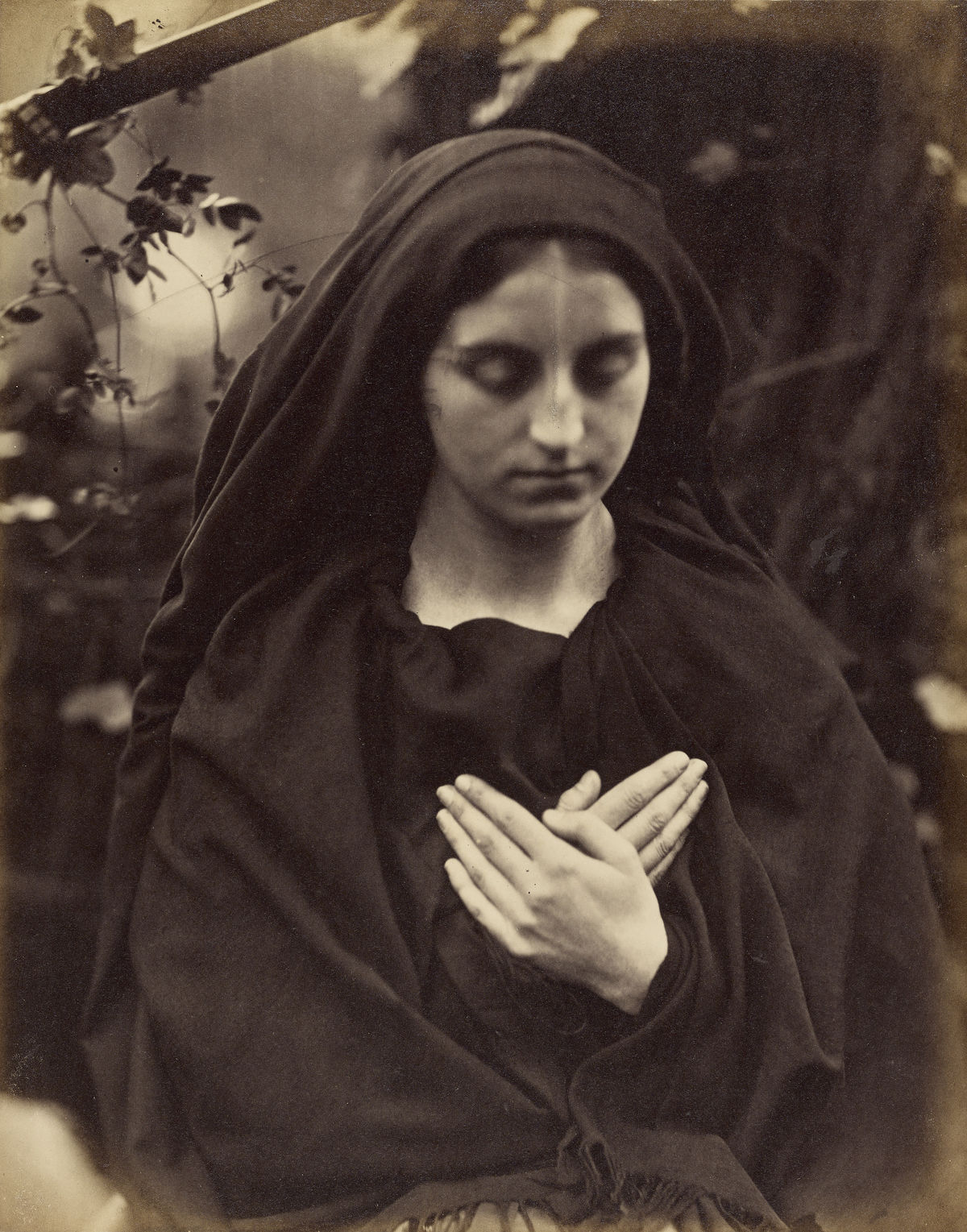
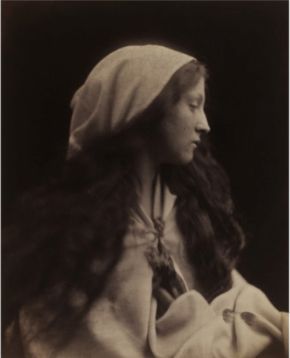
I have found a similar dynamic when I look at the work (and biography) of Photography pioneer Julia Margaret Cameron - whose portraits encompassed "mistakes" such as blur, scratches and even fingerprints on her plates. These “flaws” made many of her more Apollonian peers ridicule her work, but the last laugh is hers, for her work has stood the test of time and today is considered a pinnacle of "Fine Art Photography".
Cameron's subjects transcended mere portraiture - she used Mythology in her themes and thought more like a painter than a documenter of realism.
The rawness combined with the imagination of her work has weathered well as we have moved from realism back to a more esoteric style whereas the more polished and staid work of her “realist” contemporaries has faded into obscurity.

The lesson here is: Passion should always be the driving force. Having something to say is paramount. Technique and technical mastery should always serve the idea and the creative impulse. It is a life-long journey and we should never be afraid to improve our skills and technical mastery , but above all - we should communicate emotion and the human experience with these skills...

What Makes an Image "Good"?

I tend to think that everyone who is posting pictures they took or created thinks their stuff is good. But I think the way we grow as creatives is to detach from our connection to the image (especially the ego part ) and be able to objectively judge whether it works or not – whether it “grabs you” in some way… (For me, I can't really objectively assess an image until I have worked on at least two more after it . Only then am I able to critique that work without the veil of "I worked hard on this" wrapped around it).

I think there are three kinds of images ultimately:

Ones that have the “Wow factor”: These are images that are visually stunning and command your attention. They may just be “eye candy”, but you simply can not ignore them when they present themselves to your eyes. This can be attributed to a few different things - a stunning subject (be it model or landscape), spectacular lighting and composition and a unique perspective that forces you to look.

Then there are ones with “the Ponder Further factor”: that make you think, provoke emotions or ask you questions about the intent of the artist. These are images you can spend hours with and return to again and again.

And then there are the “Ho Hum” pictures: which neither dazzle nor captivate the imagination of the viewer. Usually what makes them boring is a lack of either of the first two components.

The best images in my opinion are a combination of the first two in some way.

Most images are in the third category and I have begun to analyze more and more what makes some images exceptional and others boring. It is more than just elements of composition, lighting, and perspective – it is ultimately the subject itself and the way it is captured and manipulated by the mind of the artist that either draws you in or doesn’t.

I try and learn from them all – what to avoid and what works.

Or, as the late great Robert Mapplethorpe said “The more pictures you see, the better you are as a photographer”.

“Cloud of Unknowing” by Thomas Dodd

“Cloud of Unknowing” by Thomas Dodd

Advice to Artists - thought must come first!

"What kind of advice would you give to artists who want to develop their skills in digital photography in order to be considered fine art?" 

The great Norwegian painter Odd Nerdrum said that "thought has to come first" and I wholeheartedly agree. 
You can imitate whatever is currently popular or even the Old Masters and you will still be missing something vital in your art. 

Being an artist means that you are using a medium to express something that is essentially inexpressible through language, something that enters the realm of archetypes and spirit. I feel that the more acquainted you are with the history of art, literature and human thought - the more concepts you will have to draw from and learn from and filter into your work.

And perhaps most important of all, I think anyone who wants to create "art" should listen to their inner voice, pay attention to their dreams and deepest thoughts. Draw your inspiration from within you and you will never be in danger of being a copycat or imitator of someone else's vision.. 

Odd Nerdrum.jpg

How to Make Your Photos Look Painterly (part 1)

A large part of the painterly look I get in my work is achieved BEFORE the image ever makes it to my computer. 

It helps to have an extensive visual vocabulary and a knowledge of classic paintings and the techniques and lighting styles that artists used (and still use) so you know exactly what it is that you are trying to achieve (for instance  - study the paintings of Caravaggio for lighting effects or look at how Rembrandt rendered skin tones and facial expressions).

“Narcissus” by Caravaggio

“Narcissus” by Caravaggio

Selecting the right model, wardrobe and set is also crucial. (i.e.- a glamour model with a fake tan and enhanced breasts is never going to look like she stepped out of a PreRaphaelite painting..sorry!!) 

Helmut Newton.jpg

And perhaps most important is the lighting. Flat studio lighting is seldom conducive for painting. The play between light and shadow is something that most master paintings depict in minute detail. 

“Sisters in the Light” by Thomas Dodd

“Sisters in the Light” by Thomas Dodd

Everything done in post should be merely an enhancement and rendering of what you captured at the time of principal photography (and all of this is coming from someone who is known primarily for "post-processing", but I always set things up in such a way that my post work will be seamless and organic...) 

“Nocturne” by Thomas Dodd

“Nocturne” by Thomas Dodd

Ten Random Things I Have Learned From Being An Artist 

Stop worrying about being commercial. Worry more about becoming the best artist you can be. If you have to support your craft by getting a job unrelated to it then do so and develop your art without the immediate concern of making a living from it. If you start making compromises and decisions about your creations based solely on making money, you may eventually end up despising what you do.. 

Read More

My Manifesto (kind of!) for the Digital Age..

I have never been a purist and in fact, no one really is,. 
It is only through bastardization and hybridization that innovation takes place and the digital revolution has swung the door open for late bloomers (and young bloomers as well) like me to start making images and breathe new life into the art of Photography..

Yes, there are millions of people calling themselves photographers now and photo-sharing sites have exploded with tons of images creating a lot of visual noise and competition for the jaded eye to sift through in search of the latest masterworks.

But like any revolution in art, the dabblers and the dilettantes will fade away eventually and those who are truly passionate about their craft, innovative in their creations and persistent in their self promotion will have their work admired and appreciated by a future generation of aspiring photographers.

We can't all be Man Ray or Diane Arbus, but there is a place for everyone in this popular and populist art form of Photography, from the hobbyists who like to document the minutiae of their daily lives. to the jaded pros who have spent more on their latest lens than you did on your last car, to the Photoshop-reliant imageshifters of the Digital age...