Why I Hate AI Images

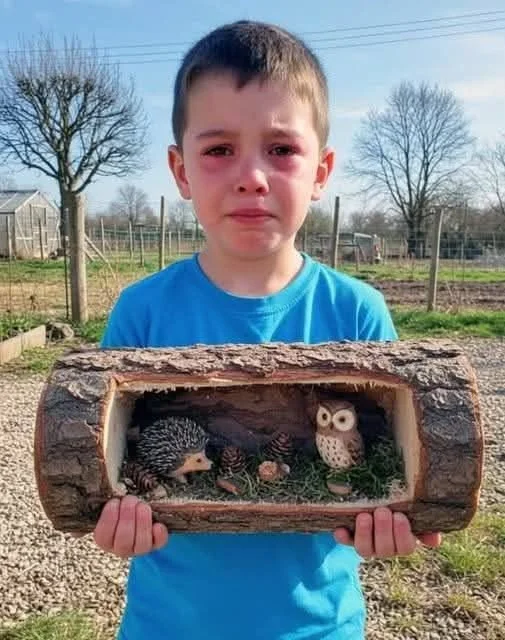
The amount of AI-generated images I’m seeing online is growing exponentially by the day. A common clickbait pattern I keep running into is the “sad child holding their artwork” trope. The script is always the same: a teary-eyed kid clutching a piece of art they supposedly made, accompanied by some AI-written caption from a “parent” begging for encouragement.

And sad to say, this ruse works like a charm eliciting floods of “cheer up little man” replies, gushing praise, and even people offering to buy the nonexistent artwork. And we all know where that leads: a one-way ticket to Scamville! What saddens me is how few people actually see through this. In the groups I’m in, I’d estimate 90% or more are fooled and the few people who point out that the post is AI get tons of negative comments, basically calling them a hater or a spoil-sport...

Up until recently, I avoided weighing in on AI. I thought maybe it could serve as a legitimate tool—something artists might combine with their own skills. But the reality I see every day is that it’s being used for cheap clickbait, recycled memes (baby Theo Von, anyone?), and hollow, AI-narrated videos.

That became even clearer when I tried to use AI (ChatGPT, specifically) while researching a case for a true crime/mystery podcast I’m producing. I asked for help on the timeline, and it got basic facts—like dates of events and even names of the people involved—completely wrong. In short, I don’t trust this shit…
At all.

And neither should you.

“Cheer up little man, almost no one can tell you are AI slop!”

Happy 125th Birthday William Mortensen

William H. Mortensen , who was born 125 years ago today, was deliberately ignored and reviled by the Photographic establishment because of his use of cinematic, mythic and sexual themes, props, darkroom wizardry (that made his photographs end up looking more like paintings than photos) and his twisted sense of humor..

Mortensen was arguably the last of the Pictorialists (an early movement in Photography that sought to elevate the craft to the level of Fine Art and to tackle subjects like psychology, mythology and Horror..) and a true lover of the Art of Photography and he taught many students not only his darkroom methods, but also how to compose an image and infuse it with depth (both of the psychological as well as tonal kinds!)

The much revered Ansel Adams even referred to him in correspondence as "the Antichrist" and much like the way Salieri was portrayed sabotaging Mozart in "Amadeus", Adams tried ( in many cases successfully) to snuff out Mortensens's work and legacy every chance he got (getting it removed from important collections and books and denigrating the Pictorialist genre often from the hallowed halls of his f64 group)..

I suppose this shouldn't come as a surprise (to any that have studied him at least) that Adams was a thin-skinned egotist who wanted to define the entire genre of photography only by his narrow "Realist" interpretation of it. After all, this was the guy (Adams) who hired a PR firm to bestow the title "World's Greatest Photographer" upon himself. It has only been in recent years that Mortensen (who died in obscurity in 1965) has been rediscovered and admired by a new generation of neo-pictorialist photographers (and photo-manipulators) and his books (which detailed his texture, composite, and psychological methods) are now being reissued and selling out editions left and right. There are also exhibitions of his work popping up in major cities around the world.

As "Amadeus" postulated, no single artist can control the fate or legacy of another in the long run.. and none of us know what future generations may rediscover and find historically significant, or more importantly - pertinent to modern times.. So I wish you - William Mortensen, a happy 125th Birthday in the eternal world of symbols and images and I hope you are looking down upon all the new accolades in your honor and occasionally turning to a seething Adams and exclaiming "See? You don't OWN this Art form.. you never did!"

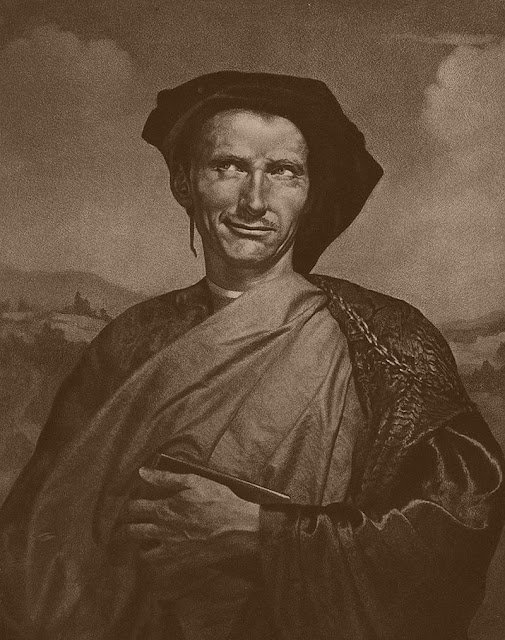
"Sepia-toned classical portrait of a man in Renaissance-style clothing with a hat, holding a book and wearing a slight smile."

Niccolò Machiavelli by William Mortensen

An Interview with Thomas Dodd - by Combustus Magazine

Combustus: Folklore and myths figure quite prominently in your work. Can you tell me what draws you into these stories? If you were ever moved to do an autobiographical piece, which folktale figure would you invoke? Or are these all aspects of yourself already?

Thomas Dodd: I have always been fascinated with myths and fairy tales. I think because they elicit such a strong response from the subconscious mind because at their core they deal with archetypal forces and facets of human nature that we all share.
These ancient stories were how our ancestors codified human psychology through representing forces of the self and the universe as Gods, Goddesses and supernatural events.
I have been told more than once that all of these images are just different facets of my own being and I have to agree with that assessment, although I am not ruling out making an appearance in my own work as a mythic creature at some point in the future. . The one time I portrayed myself as a transformed being, it was as the crucified Christ. This was not only a link to my Catholic upbringing, but my way of showing that the Christ metaphor remains so strong in our culture because all of us have felt the death/rebirth experience many many times in our lives.

Combustus: What kind of response did you get to this piece, Thomas? Were you at all surprised?

Thomas Dodd: People seemed to really like it and wanted to see more self portraits. I was mildly surprised by that because I think the models I work with are infinitely more photogenic and interesting than I am!

Combustus: What we love is intimacy and authenticity and vulnerability. And courage. That is what connects us, one to the other.

Thomas Dodd: Yes, and I do try to infuse every fiber of my being into my work, whether it is a picture of a model or myself. I see what you mean though, that self-portraits are particularly “revealing” of the true essence of the person.

Combustus: Yes, I am intrigued with where Thomas Dodd fits into these stories. By photographing The Feminine in others, are you able to access this part of yourself? Is this one of the gifts being an artist affords you?

Thomas Dodd: I think that my art is a way I integrate both my masculine and feminine selves. It certainly allows my anima to be portrayed. I depict masculine energy in a completely different way than my portrayals of femininity. I view the masculine side as the voyeuristic half, beholding the beauty of the feminine side.

Combustus: Please tell me about “The Inquisitor.” It is decidedly different from the rest of your work and elicits very strong reactions, doesn’t it?

Thomas Dodd: The few times I have used males in my work, I’ve looked for older and more interesting faces. “The Inquisitor” came about when the female model told me she was willing to shave her head on camera. I instantly thought of the Spanish Inquisition and how the Inquisitors shaved the heads of the women who were accused of being heretics, to humiliate them and make them vulnerable and truly “naked”. So that is what this is depicting. I think the male has a face that tells a story; there is a malevolence and piousness about his look. And the female prostrated in front of him also speaks volumes as well.

Combustus: Thomas, how would you like to affect changes in the art world?

Thomas Dodd: I think my role as a creator in the digital realm is where I can affect change – that I can show people that art created on the computer is just as much fine art as other mediums are.

Combustus: In your video you made reference to the classical painters who have served as inspiration for you.

Thomas Dodd: Yes, I am definitely more influenced by painters than photographers. I love Rembrandt and Caravaggio for the way they rendered light and skin tones, Giuseppe Arcimboldo for his fusion of plant and human forms, the Pre-Raphaelites for their depiction of myth and feminine beauty, and perhaps the biggest influence on me is that of the Symbolists, because they perfectly united the metaphoric and the beautiful in their works.

Combustus: Critics of digital editing will say that there is an intimacy lost with this technique, compared to the days when we were developing our negatives in darkrooms. That hands-on experience of getting the chemicals on your hands, the odor… Yet you find digital editing to be an infinitely intimate experience, yes?

Thomas Dodd: Yes, extremely intimate. Although this is all taking place on a computer, it is definitely an immersive experience for me and I meticulously craft my images, layer upon layer upon layer.
I think some detractors of digital imagery perhaps think that it is a one click process or that there is some filter that is magically applied to the photos to make them look the way they do, but I can assure you that it is a craft like any other that takes years to get good at. I will say that although most of my work is done on the computer, I still think of it as an organic and natural process and I strive for the end result to show that.

Combustus: Are your models ever surprised with where you land when the image is completed? Do they say you have uncovered parts of themselves they didn’t know existed? Or that you have created completely new characters with their forms as simply the starting point?

Thomas Dodd: Some models have told me that I have revealed facets of their personality that they knew existed but hadn’t seen depicted in a tangible form yet. Others have told me that I “idealized” them in some way – made them a bit more beautiful or mythic. I always look for something deeper when I photograph them. A lot of photography is on the surface and yet so much of great art goes deeper than that and reveals the very essence of the subject being depicted. That is the kind of art that intrigues me and that is what I set my sights on achieving in my work.

Combustus: Yes I see this, very much. I imagine you as you walk down the street and make your way through your day seeing the beauty within those you pass, yes? Am I not too far off base?

Thomas Dodd: Yes, definitely, that is the gift of doing this. I have realized that everyone has something beautiful or intriguing about them in some way. My job is to find that and enhance it.

Combustus: A beautiful gift, Thomas. How it must enrich your life. Imagine if we all adopted this practice. How much different the world would be. Instead of looking suspiciously at one another, preparing ourselves to be disappointed, expecting the worse…if instead we could be looking, ever-vigilant, for the beauty that may only be partially hidden.

Thomas Dodd: Yes, and another tragedy is the way that so many people (women in particular) feel ugly or not beautiful enough because of the utterly false and misleading way that beauty is defined in pop culture. People chase after an illusion while failing to see how beautiful they really are.

Combustus: Did someone do this for you, as a child, perhaps? See the beauty, the potential, the magic, within you? Is this your way of expressing gratitude for being given this way of seeing?

Thomas Dodd: I had supportive parents who definitely encouraged me to be whatever I wanted to be, but I would say that I too have gone through periods of self-doubt and negativity, but photography and particularly the success I have had at it has made me feel more confident and vital than I ever felt before at any point in my life ...Yet another gift from this journey.
m1 (44).jpg

The Artist's Tenth Commandment: "Always Keep Making Art!"

The ultimate aim (conscious or sub-conscious) of the artist is to chronicle one’s journey on earth (with your thoughts and emotions manifested in a tangible form) and then perhaps - you leave something beautiful or poignant behind that touches people who haven’t even been born yet..

In a way, it is a quest for immortality - for a deeper meaning and it serves a primal and deep-seated motivation that all humans have - to be able to say on their death bed “I was here, and I mattered”

The journey of the artist .. is the journey of the soul..

The Ninth Commandment - Follow Your Passion

This should be the simplest commandment to obey, but often ends up being the most difficult one of all..
Ideally you should create art because you are driven to do it. Because you are compelled to do it.
You shouldn’t worry so much about making a living at it. Follow your passion and create the images you are COMPELLED to create, and people will come to recognize and appreciate your genuineness and THEN the money will come.
But “Ideally” quite often butts heads with “realistically” in the very “real” world we find ourselves living in (of having to pay rent and bills).

So what usually happens is something like this:
You get the photography bug because you are inspired by some particular imagery or photographer..
You basically fall in love with it!
You start doing it as a hobby and are consumed by it - you do it every day and are driven to get better, to learn more.. You live, breathe and eat your art (even though you have a day job).
Eventually people start noticing how committed you are and tell you “you should be making a living at this”.

You agree with them and you start trying to charge people and get frustrated by the fact that no one wants to pay you for your work.
Then you start getting on online forums and searching for how to make a living with your camera.
Maybe you start listening to what “seasoned pros” tell you to do and accept their experience as wisdom.
Then perhaps you enter into a genre of photography that wasn’t really what you originally wanted to do, but you figure the goal is to make money with your camera - so you study hard start assisting, then eventually spend all your time and energy devoted to this money-making pursuit.
Eventually the money comes and with that comes all the headaches of running a full-time business.
But hey - you are indeed making a living with your camera!
You may end up very happy and artistically fulfilled AND with the gratifying feeling of knowing that you are making a living doing what you love.. or you may end up miserable and feeling like you lost your passion along the way.

Please note - it is VERY IMPORTANT for me to say here that I am not putting down any of these valid genres of photography that can all yield a very nice living for you if you succeed at them. Commercial work, Family Portraits, weddings, boudoir, architectural photography , corporate/actor head-shots etc. These are all varied, rich and diverse fields and there are plenty of extremely talented, passionate and financially successful photographers working within all of them.
The trick is, regardless of your chosen field, to stay passionate about photography - bring that passionate zeal you had as a newbie to your money-making pursuits. Continue to grow and to innovate and you will be rewarded in many ways - not just financially.

Above all things: follow your passion - let it drive you on you journey as an Artist….

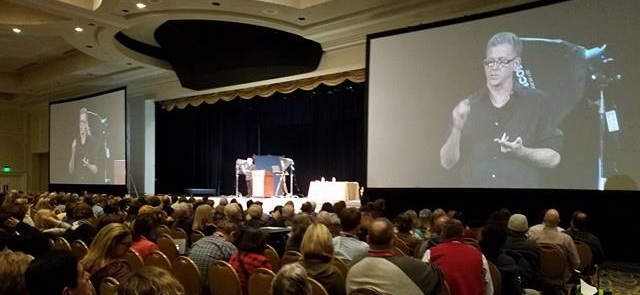
"Large audience attending a conference presentation with a speaker on stage and his talk projected on big screens."

Me, being “passionate” about teaching.. at Imaging USA 2018 in Nashville Tennessee
(photo by Alex VanZeelandt)

The Eighth Commandment - Be Genuine

The Eighth Commandment  - Be Genuine

And this is really what self marketing is about - not bragging about your accomplishments or talking about your gear, education, or credentials.
It is about getting to the crux of why you create and what your mission is as a human and as an artist. If you are sincere and speak from your heart and your lived experience, people will want to buy artwork from you..

Read More

The Seventh Commandment - Assume Nothing & Get Everything in Writing

The Seventh Commandment - Assume Nothing & Get Everything in Writing

Now some folks ( Including me) might say it is rather presumptuous to send a contract over to a gallery that just gave you a foot in the door (especially if you are just having one or 2 pieces in a group show - which is usually how a gallery will “try you out” to see how your art goes over with their collector base and also what you are like to deal with.. )
But at the very least you should have an email exchange with the curator that spells out what the terms of your exhibition, affiliation or representation are.

Read More

The Sixth Commandment - Do Thy Research

The Sixth Commandment - Do Thy Research

In this digitally connected world we live in, all art galleries are literally just a finger click away, so when searching for the right gallery to show (and sell) your work in , don’t just start randomly clicking on ones in the area you are targeting and then start sending them copied and pasted emails. .
Stop. Study their websites. Take a look at the artists they represent. Look at the past shows they have had and see if they ever have group shows or open calls. And most importantly, look at their submission policies for new artists
Honestly ask yourself “Would my work even fit in here? “

Read More

The Fifth Commandment - Thou Shalt Not Speak Ill of Thy Fellow Artists

The Fifth Commandment - Thou Shalt Not Speak Ill of Thy Fellow Artists

You are not going to get along with everyone you meet in life and the art world is no exception..
It’s a sad but true fact that sometimes in our journey, we have to deal with toxic people, narcissists, manipulators, psychic vampires and those whose ambition overshadows their compassion.

Read More

The Fourth Commandment - Thou Shalt Be Kind to the Newbies

Be kind to the beginners, the newbies and the students of your chosen field. Answer their questions not with world-weary snark or arrogant disdain, but with a sincere attempt towards being helpful and sharing your knowledge.
If you think something is incorrect or not a good idea - then offer them an alternative or (what you think is) a correct path based on your experience and share that..
In short - be helpful. Don't be a jerk.

It is not only good karma and the right thing to do, it (being a jerk) also can come back to bite you in the ass years later...
For a lot of these newbies eventually become your peers and sometimes rise to greater heights than where you are at (and they might even be in a position to accept or reject your work for a show, award or prize. The world we find ourselves in is often a small and interconnected one!)...

It's a fact of human nature that people tend to recall perceived slights or blatant put-downs just as strongly (even more so in fact) than the helpful advice they receive at the beginning of their journey..
Or, as the old saying goes: Be kind to the people on the way up - you will meet them all again on the way down..

"Two men in suits smiling and shaking hands while secretly holding knives behind their backs, symbolizing betrayal and hidden motives."

The Third Commandment - Honor Thy Editions

This is yet another example of building and maintaining your reputation through honesty and integrity.

When you do a limited edition print - you must be 100% accurate that if you say there are 20, that only 20 prints of that image exist in the the world!
Fudging by saying “I will do twenty 11 x 17s, then another twenty 20 x 16s, and another twenty 20 x 30s etc”. is tempting to do, but in my opinion inherently dishonest..

if someone pays for a piece that is marked 1/20 - they are buying it with the assumption that only 19 other people in the world have that image . Don't cheat the numbers or again you risk losing another collector for life..
As always, the gain of a few extra dollars in the short term is overshadowed by the irreparable loss of trust by your collector base.. and your reputation is the most precious commodity you have in the art world!

"Living room corner with a chair, plush toys, side table with framed photos, and a dark portrait painting hanging on the wall."

My limited edition print “A Little Bird Told Me” in a private collector’s home

The Second Commandment - Thou Shalt Have Consistent Prices

While it may be tempting to have higher prices in big city markets and lower prices in boutique galleries, artist co-ops or smaller towns, you once again have to step into your collector’s (and gallerist’s) shoes and see things from their perspective to realize that this is a very bad (and reputation-harming)idea..

If a collector pays top dollar for a piece in NYC and then travels to Topeka and sees the same piece priced significantly lower - they will feel ripped off and never want to buy from you (and quite possibly the gallery they bought your piece from) again. You have lost a client for life and you don't even know about it.. Likewise, the gallerist wants to know that your prices are consistent and that no other gallery is going to undercut them.
Keep your prices the same in all markets (as well as on the web). Remember - we live in a connected world these days and price checks are really just a keystroke away.

"Art gallery interior with illuminated paintings on white walls and a seated sculpture placed beneath spotlight lighting."

“Dandelion” by Thomas Dodd in the Museum of Contemporary Art - Sicily

The First Commandment - Thou Shalt Not Steal a Collector From a Gallery

(The first installment of my “10 Commandments of a Gallery Artist “
Thou Shalt Not Steal a Collector From a Gallery
This is the cardinal sin of all Fine Art sins.
It is the one thing you can do that will not only ensure you no longer exhibit at the gallery that introduced you to the collector, it may also get you blacklisted by every other gallery owner that the curator you screwed over knows.

I realize that the temptation to do this can be almost overwhelming for an artist, but don't do it!

This is how it usually goes:
Someone buys your work from a gallery and the gallery takes a hefty commission (usually 50%) from the sale.. Then a few months later, that same collector looks you up on the web or social media, contacts you directly and says they want to see more of your work.
Now perhaps the collector is thinking they can get a better deal buying directly from you and they want to cut the original gallery out of the transaction....and you are probably thinking "I can get a lot more money for this piece without having to pay a big commission to the gallery and then the client will be mine for life"!

Wrong! You may be acquiring one private collector but you are losing many, many more potential clients by screwing over the gallerist who introduced you to each other.. and again - you will possibly be blackballed by other galleries if the word gets around that you are not loyal to the unspoken rules of the Gallery/artist system.


The right thing to do when a collector contacts you directly is to copy the curator who introduced you to each other on the return email to keep them in the loop and let them know that you will give them their commission on any further sales that result from this relationship ..
Not only because it is good business and good karma - it is also acknowledging that if it weren't for the reputation of that gallery the curator has painstakingly built, that collector would never have seen your work in the prestigious position of being displayed in (and promoted by) a top-tier gallery.
A lot of artists tend to minimize the importance of gallerists/curators , but a good gallery owner has a client base that trusts their tastes and buys exclusively from the stable of artists they represent.
Gallery owners also act as unofficial PR agents and managers for their artists - getting you coverage in local and national media, talking your work up to the movers and shakers and monied interests in their community (as well as placing it with designers, interior decorators and art consultants), and finding you commissions and private collectors , all the while adding prestige and gravitas to your artistic brand
( not to mention the numerous hefty expenses that are involved in keeping a top tier gallery afloat)


In short - just don't it!
So much of success in the Art world is based on maintaining long-term relationships. Acknowledge the importance of those you work with and they will do the same for you!

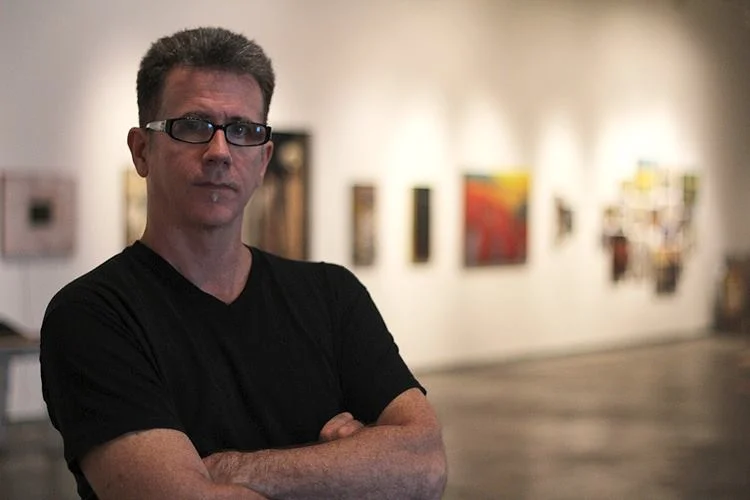
photo of Thomas Dodd by Jon Kay

photo of Thomas Dodd by Jon Kay

How to Effectively Use Facebook Groups as an Artist

A common mistake I see artists making on facebook and other social networks is joining an artist networking group and then just posting their artwork, where it mostly gets ignored..
Why? Because everyone else in the group is an artist looking to promote their OWN work!

The fact is the majority of your potential audience will more than likely NOT be artists or in artist groups... Your audience will be in other groups, where non-artists congregate.
For instance, I have determined that the main market for my commissioned portraiture is middle to high income women in their 30s to 50s.
I can reach this audience much more efficiently by targeting yoga groups, neighborhood groups, parenting groups, decorating groups and new age spirituality type groups then by posting my work in photography or “share your art” groups.

And this is key - I don't just join and immediately spam them with my artwork. I start out by joining in conversations and in the course of contributing and conversing, I mention that I am an artist and then I can link to my facebook fan-page or post a picture of some children's or family portraits I have done... All of this is in the course of an online conversation. The trick is - you have to participate in discussions . No one likes a spammer - online or off!

Social media rewards “sharing” and penalizes self-promotion..

Is Creativity Theft?

Here is a provocative quote on the nature of creativity by the American filmmaker Jim Jarmusch:

“Nothing is original. Steal from anywhere that resonates with inspiration or fuels your imagination. Devour old films, new films, music, books, paintings, photographs, poems, dreams, random conversations, architecture, bridges, street signs, trees, clouds, bodies of water, light and shadows.
Select only things to steal from that speak directly to your soul. If you do this, your work (and theft) will be authentic. Authenticity is invaluable; originality is non-existent. And don’t bother concealing your thievery - celebrate it if you feel like it. In any case, always remember what Jean-Luc Godard said: ‘It’s not where you take things from - it’s where you take them to.’"


What might make you bristle when you read this is his use of the word "steal" - which of course is something we have all been trained to recoil from and think of as wrong and sinful.

But Jarmusch is not telling people it's OK to rip off one particular idea or image from a fellow creator. He is talking about the true essence of creativity - in which we amalgamate all our influences and what I call our "visual vocabulary" (the sum total of all the images we have processed in our memory) into our new creations ( or, as I often tell my students "Use everything at your disposal"). Art is not created in a vacuum of ideas..

Of course, the last quote from Godard is a key qualifier "It's not where you take things from, it's where you take them to.

left -” Pietà” by Sofonisba Anguissola , right - “Pieta in Gangland” by Thomas Dodd

left -” Pietà” by Sofonisba Anguissola , right - “Pieta in Gangland” by Thomas Dodd